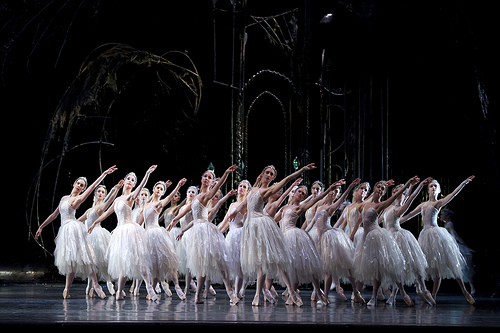
On the evening of Monday 17th February 2014 I attended The Russian State Ballet and Orchestra of Siberia's performance of Sleeping Beauty at Norwich Theatre Royal. This is the classic story of love and innocence, mystery and magic set to Tchaikovsky's sublime score.
A wicked fairy places a fatal curse on the baby Princess Aurora, which the good Lilac Fairy softens to a sleep of one hundred years. Only a prince’s kiss can break the spell. This is every child's favourite fairy tale which The Russian State Ballet of Siberia brought magically to life on the stage at Norwich Theatre Royal.
This was a night full of stunning choreography, sumptuous costumes and wonderful sets that formed the fantasy world in which the Lilac Fairy struggles against the evil Carabosse. The sell out audience had a brilliant evening full of fairy tale magic and the sounds of Tchaikovsky. It was fantastic to see such an amazing Ballet in my home city of Norwich.
This is the Blog of Andy Yourglivch bringing you Art, Culture, Literature, Music and Poetry direct from Norwich. A Fine City full of Fine Arts. To see a world in a grain of sand, and a heaven in a wildflower... hold infinity in the palm of your hand, and eternity in an hour...
Showing posts with label Tchaikovsky. Show all posts
Wednesday, 19 February 2014
Sunday, 22 December 2013
The Nutcracker at the London Coliseum
On Friday 20th December 2013 I attended the English National Ballet's matinee performance of Tchaikovsky's The Nutcracker at the London Coliseum. We took a journey back in time to a frost-covered, gas-lit London and joined Clara, her Nutcracker doll and the magician Drosselmeyer in this traditional, festive tale.
This production of The Nutcracker was based on a concept by Toer van Schayk and Wayne Eagling. There were fantastic performances from Elena Glurdjidze as Clara and Fabian Reimair as the Nutcracker. Gavin Sutherland conducted The Orchestra of English National Ballet.
On an enchanted Christmas Eve, under the heavy boughs of the candlelit tree Clara battled with the Mouse King and fell in love with a handsome stranger. As the air grew colder and snowflakes began to fall, Clara and her valiant Nutcracker took a hot air balloon ride across the frost-dusted London skyline to the glistening Land of Snow where her adventure really began.
In a world of Edwardian elegance, The Nutcracker brought to life the eternally popular Tchaikovsky score featuring the Dance of the Sugar Plum Fairy and the Waltz of the Flowers. This classical production is a magical, memorable and unmissable Christmas treat. This was the third year in a row that I have seen this production at the London Coliseum and it is always a wonderful experience and performance.
This production of The Nutcracker was based on a concept by Toer van Schayk and Wayne Eagling. There were fantastic performances from Elena Glurdjidze as Clara and Fabian Reimair as the Nutcracker. Gavin Sutherland conducted The Orchestra of English National Ballet.
On an enchanted Christmas Eve, under the heavy boughs of the candlelit tree Clara battled with the Mouse King and fell in love with a handsome stranger. As the air grew colder and snowflakes began to fall, Clara and her valiant Nutcracker took a hot air balloon ride across the frost-dusted London skyline to the glistening Land of Snow where her adventure really began.
In a world of Edwardian elegance, The Nutcracker brought to life the eternally popular Tchaikovsky score featuring the Dance of the Sugar Plum Fairy and the Waltz of the Flowers. This classical production is a magical, memorable and unmissable Christmas treat. This was the third year in a row that I have seen this production at the London Coliseum and it is always a wonderful experience and performance.
Friday, 22 November 2013
Matthew Bourne's Swan Lake at Norwich Theatre Royal
On the evening of Thursday 21st November 2013 I attended the performance of Matthew Bourne's Swan Lake at Norwich Theatre Royal. Thrilling, audacious and totally original, Matthew Bourne's legendary production transforms one of ballet's best -loved stories into a stylish, witty, poignant, contemporary tale with extravagant, award-winning designs by Lez Brotherston.
Perhaps best-known for replacing the traditional female corps de ballet with a menacing male ensemble, Matthew Bourne blends dance, style, humour, spectacle, character comedy and mime to create a provocative and powerful Swan Lake for our times. Originally written by Tchaikovsky in the late 19th century, Swan Lake was staged at Moscow’s Bolshoi Theatre in 1877.
There were fantastic performances from Jonathan Ollivier as The Swan, Sam Archer as The Prince and Madelaine Brennan as The Queen on a magical and fun night at Norwich Theatre Royal. This is the Modern Dance version of Swan Lake and is a very powerful and inspired production.
Perhaps best-known for replacing the traditional female corps de ballet with a menacing male ensemble, Matthew Bourne blends dance, style, humour, spectacle, character comedy and mime to create a provocative and powerful Swan Lake for our times. Originally written by Tchaikovsky in the late 19th century, Swan Lake was staged at Moscow’s Bolshoi Theatre in 1877.
There were fantastic performances from Jonathan Ollivier as The Swan, Sam Archer as The Prince and Madelaine Brennan as The Queen on a magical and fun night at Norwich Theatre Royal. This is the Modern Dance version of Swan Lake and is a very powerful and inspired production.
Sunday, 25 August 2013
BBC National Orchestra of Wales at the BBC Proms
On the evening of Wednesday 24th July 2013 I attended Prom 16 of the BBC Proms at the Royal Albert Hall in London. This performance from the BBC National Orchestra of Wales conducted by Jac van Steen with cellist Raphael Wallfisch was a programme of music from three British composers and the first in this season's Tchaikovsky symphony cycle.
The programme consisted of Falstaff - Elgar, Sapphic Poem - Bantock, Henry V - Touch her soft lips and part; Death of Falstaff - Walton and Symphony No. 4 in F minor - Tchaikovsky.
Elgar's Falstaff was premiered in 1913 which the composer called a symphonic study because it was a portrait not just of Falstaff, but of Shakespeare and all human life. Falstaff is a character from Henry IV Parts 1 and 2 who was a thoroughly bad, if sometimes lovable influence on the future Henry V, who disowns his ancient friend when he succeeds to the throne.
The Sapphic Poem was composed by Bantock in 1906. The version for cello and orchestra was published in 1909. It is closely associated with Bantock's Sappho, a vocal cycle setting fragments from the 7th century BC poetess of Lesbos, in translations by Bantock's wife Helena. This was the Proms premiere of the Sapphic Poem.
Touch her soft lips and part and The Death of Falstaff are from the 1944 film Henry V, for which William Walton composed the music in close collaboration with the film's director and star Laurence Olivier. Touch her soft lips and part is a romantic piece where Pistol bids farewell to his new wife before setting off for France. The Death of Falstaff is a series of variations founded on the Elizabethan drinking song Watkyn's Ale from the Fitzwilliam Virginal Book.
Tchaikovsky's Symphony No. 4 was written between 1877 and 1878 and was considered by the composer as a reflection of his emotional strife. Tchaikovsky referred to the symphony's opening fanfare as fate, the force of destiny. During the composition of the Fourth Symphony Tchaikovsky started to benefit from the regular allowance sent to him by the wealthy, eccentric widow Nadezhda von Meck. The Fourth Symphony is dedicated to her.
The BBC National Orchestra of Wales conducted by Jac van Steen performed a wonderful programme of music with the highlight being Tchaikovsky's Symphony No. 4. Raphael Wallfisch who celebrates his 60th birthday this year gave an intimate performance of Bantock's Sapphic Poem. There was also an encore of Bantock's Hamabdil. This was a fantastic Prom at the Royal Albert Hall which I greatly enjoyed.
The programme consisted of Falstaff - Elgar, Sapphic Poem - Bantock, Henry V - Touch her soft lips and part; Death of Falstaff - Walton and Symphony No. 4 in F minor - Tchaikovsky.
Elgar's Falstaff was premiered in 1913 which the composer called a symphonic study because it was a portrait not just of Falstaff, but of Shakespeare and all human life. Falstaff is a character from Henry IV Parts 1 and 2 who was a thoroughly bad, if sometimes lovable influence on the future Henry V, who disowns his ancient friend when he succeeds to the throne.
The Sapphic Poem was composed by Bantock in 1906. The version for cello and orchestra was published in 1909. It is closely associated with Bantock's Sappho, a vocal cycle setting fragments from the 7th century BC poetess of Lesbos, in translations by Bantock's wife Helena. This was the Proms premiere of the Sapphic Poem.
Touch her soft lips and part and The Death of Falstaff are from the 1944 film Henry V, for which William Walton composed the music in close collaboration with the film's director and star Laurence Olivier. Touch her soft lips and part is a romantic piece where Pistol bids farewell to his new wife before setting off for France. The Death of Falstaff is a series of variations founded on the Elizabethan drinking song Watkyn's Ale from the Fitzwilliam Virginal Book.
Tchaikovsky's Symphony No. 4 was written between 1877 and 1878 and was considered by the composer as a reflection of his emotional strife. Tchaikovsky referred to the symphony's opening fanfare as fate, the force of destiny. During the composition of the Fourth Symphony Tchaikovsky started to benefit from the regular allowance sent to him by the wealthy, eccentric widow Nadezhda von Meck. The Fourth Symphony is dedicated to her.
The BBC National Orchestra of Wales conducted by Jac van Steen performed a wonderful programme of music with the highlight being Tchaikovsky's Symphony No. 4. Raphael Wallfisch who celebrates his 60th birthday this year gave an intimate performance of Bantock's Sapphic Poem. There was also an encore of Bantock's Hamabdil. This was a fantastic Prom at the Royal Albert Hall which I greatly enjoyed.
Sunday, 30 December 2012
The Nutcracker at the London Coliseum
On the evening of Saturday 29th December 2012 I attended a traditional London Christmas performance of Tchaikovsky's The Nutcracker. My festive destination was the London Coliseum for the English National Ballet's production of this timeless classic.A combination of Wayne Eagling's choreography and Peter Farmer's designs brought us the magic of Christmas while showing a darker version with the threatening presence of the Mouse King being felt throughout the ballet until finally good triumphs over evil. The Orchestra of English National Ballet played beautifully at this historic London Theatre while Tamara Rojo as Clara and Esteban Berlanga as the Nephew were outstanding. Tamara Rojo is in her first season as Artistic Director of English National Ballet.
The audience at the London Coliseum were taken on a journey back in time with the English National Ballet to a frost-covered, gas lit world with Clara, her Nutcracker doll and the mysterious Drosselmeyer in this traditional, festive tale full of Edwardian elegance. On Christmas Eve under the candlelit tree Clara battles with the Mouse King and falls in love with a handsome Prince. As the snowflakes begin to fall Clara and her Nutcracker take a balloon ride across the frosty skyline to the Land of Snow where her adventure really begins.
This was a magical and memorable treat not to be missed and showed us all the magic of Christmas combined with wonderful ballet and music. The setting was perfect as we were all enchanted by this perfect festive story. Christmas is not complete without The Nutcracker.
Saturday, 15 December 2012
Matthew Bourne's Sleeping Beauty Magic!
Matthew Bourne's Sleeping Beauty arrived at Norwich Theatre Royal in November as New Adventures' 25th Anniversary celebrations in 2012 culminated in the world premiere of Matthew Bourne's latest re-imagining of an iconic and beloved ballet classic. Matthew Bourne's Sleeping Beauty sees the choreographer return to the music of Tchaikovsky to complete the trio of the composer's ballet masterworks.
I attended the matinee performance on Saturday 24th November 2012 as Matthew Bourne's gothic fairy tale brought the magic of Tchaikovsky to Norwich Theatre Royal. Perrault's timeless fairy tale about a young girl cursed to sleep for one hundred years, was turned into a ballet by Marius Petipa in 1890. Matthew Bourne takes this as his starting point, setting the christening of Aurora in the year of the ballet's first performance. This was a period when fairies, vampires and decadent opulence fed the gothic imagination.
As Aurora grows into a young woman we move forward to a mythical golden age of long summer afternoons, cricket and new dance crazes. Years later, awakening from her century long slumber, Aurora finds herself in the modern day. This haunting new scenario creates a supernatural love story across the decades, that even the passage of time itself cannot hinder.
This was a magical afternoon at Norwich Theatre Royal as once again Matthew Bourne has done something different and unique to a traditional classic ballet. There was lots of fun in this tale of good versus evil as Sleeping Beauty was turned into a gothic tales for all ages.
I attended the matinee performance on Saturday 24th November 2012 as Matthew Bourne's gothic fairy tale brought the magic of Tchaikovsky to Norwich Theatre Royal. Perrault's timeless fairy tale about a young girl cursed to sleep for one hundred years, was turned into a ballet by Marius Petipa in 1890. Matthew Bourne takes this as his starting point, setting the christening of Aurora in the year of the ballet's first performance. This was a period when fairies, vampires and decadent opulence fed the gothic imagination.
As Aurora grows into a young woman we move forward to a mythical golden age of long summer afternoons, cricket and new dance crazes. Years later, awakening from her century long slumber, Aurora finds herself in the modern day. This haunting new scenario creates a supernatural love story across the decades, that even the passage of time itself cannot hinder.
This was a magical afternoon at Norwich Theatre Royal as once again Matthew Bourne has done something different and unique to a traditional classic ballet. There was lots of fun in this tale of good versus evil as Sleeping Beauty was turned into a gothic tales for all ages.
Monday, 3 December 2012
St. Gregory's Orchestra's Remembrance Day Concert
On the afternoon of Sunday 11th November 2012 I attended the St. Gregory's Orchestra's Remembrance Day Concert at Princes Street United Reformed Church, Norwich. The orchestra were conducted by Martin Wyatt with Alison Mills as Leader. Soloists were Kevin O'Regan and Beverley McInnes.
The programme consisted of The Warsaw Concerto - Addinsell, Crisantemi - Puccini, Roses of Picardy - Wood/Weatherly, Movements from Czech Suite - Dvorak and Symphony No.5 - Tchaikovsky. The concert was given in aid of Princes Street United Reformed Church, which faces large bills for essential repairs and maintenance. This beautiful building is not just a place of worship but also home to numerous local organisations.
There was a very nice atmosphere at the venue as the St. Gregory's Orchestra played a wonderful programme of music. From The Warsaw Concerto which evoked memories of the 1940's to Tchaikovsky's Symphony No.5 Martin Wyatt conducted the orchestra splendidly. Refreshments were served in the coffee bar during the interval.
The programme consisted of The Warsaw Concerto - Addinsell, Crisantemi - Puccini, Roses of Picardy - Wood/Weatherly, Movements from Czech Suite - Dvorak and Symphony No.5 - Tchaikovsky. The concert was given in aid of Princes Street United Reformed Church, which faces large bills for essential repairs and maintenance. This beautiful building is not just a place of worship but also home to numerous local organisations.
There was a very nice atmosphere at the venue as the St. Gregory's Orchestra played a wonderful programme of music. From The Warsaw Concerto which evoked memories of the 1940's to Tchaikovsky's Symphony No.5 Martin Wyatt conducted the orchestra splendidly. Refreshments were served in the coffee bar during the interval.
Labels:
Addinsell,
Alison Mills,
Beverley McInnes,
Classical Music,
Dvorak,
Kevin O'Regan,
Martin Wyatt,
Music,
Norwich,
Princes Street,
Puccini,
St Gregory's Orchestra,
Tchaikovsky,
United Reformed Church,
Weatherly,
Wood
Monday, 29 October 2012
Swan Lake at The Royal Opera House
On Saturday 13th October 2012 I caught the early train from Norwich to London looking forward to a splendid day which included attending The Royal Ballet's matinee performance of Swan Lake at The Royal Opera House.
Swan Lake was Pyotr Il’yich Tchaikovsky's first score for ballet which was premiered in 1877. Anthony Dowell's romantic interpretation returns the ballet to its 1895 origins by using the choreography of Lev Ivanov and Marius Petipa.
In the castle grounds Benno von Somerstein and other friends of Prince Siegfried are waiting for his arrival to celebrate his coming of age. A feast begins when the Prince and his tutor Wolfgang appear. The Queen reminds the Prince that tomorrow he must formally choose his bride at the ball. When the party finishes the Prince tells Benno and Wolfgang that he wants to remain for a little longer on his own.
Prince Siegfried is magically drawn to the banks of the lake where a flock of white swans are swimming. One of the Swans tells the Prince that she is Princess Odette and that she and her companions have been bewitched by the Evil Genius who in the form of a huge black bird is constantly guarding them. By day the girls are fated to take the form of swans and only at night are they restored to their human form. The spell will be broken when a man falls in love with the Princess.
They dance for the Prince who is captivated by Odette and swears to save her from the magic of the Evil Genius. Odette warns him that the Evil Genius can only be overthrown when a man is prepared to sacrifice his life for love. The Prince invites Odette to the ball.
The Master of Ceremonies gives his final orders as people arrive for the ball. The Queen and Prince Siegfried greet their guests and the brides appear and dance for the Prince. He finds them all charming and beautiful but none to whom he can swear eternal love.
Fanfares announce the arrival of Von Rothbart and his daughter Odile who resembles Odette. The Prince becomes captivated by her. Odette tries to remind him of the Evil Genius and his dangerous magic but the Prince does not see her.
Convinced that Odile and Odette are the same girl Prince Siegfried chooses Odile as his bride. He suddenly sees Odette and realises that he has been deceived. Von Rothbart and Odile disappear leaving Odette destined to remain forever in the powers of the Evil Genius.
The Prince begs Odette to forgive him for his unwitting betrayal swearing his love. He is ready to sacrifice his life to defeat the Evil Genius and rushes into the waves carrying the tyrant bird with him. Both die in the cold waters of the mysterious lake leaving Odette grieving for her beloved Prince.
Brilliant performances from Marianela Nunez as Odette/Odile and Thiago Soares as Prince Siegfried made for a wonderful time in Covent Garden at The Royal Opera House as The Royal Ballet performed the magic of Swan Lake. Fantastic costumes showed the contrast between human and spirit worlds, while glowing lanterns and shimmering fabrics designed by the work of Carl Fabergé created a magical setting. The Orchestra of The Royal Opera House conducted by Boris Gruzin combined with the outstanding dancing from The Royal Ballet made this the perfect afternoon in London.
Swan Lake was Pyotr Il’yich Tchaikovsky's first score for ballet which was premiered in 1877. Anthony Dowell's romantic interpretation returns the ballet to its 1895 origins by using the choreography of Lev Ivanov and Marius Petipa.
In the castle grounds Benno von Somerstein and other friends of Prince Siegfried are waiting for his arrival to celebrate his coming of age. A feast begins when the Prince and his tutor Wolfgang appear. The Queen reminds the Prince that tomorrow he must formally choose his bride at the ball. When the party finishes the Prince tells Benno and Wolfgang that he wants to remain for a little longer on his own.
Prince Siegfried is magically drawn to the banks of the lake where a flock of white swans are swimming. One of the Swans tells the Prince that she is Princess Odette and that she and her companions have been bewitched by the Evil Genius who in the form of a huge black bird is constantly guarding them. By day the girls are fated to take the form of swans and only at night are they restored to their human form. The spell will be broken when a man falls in love with the Princess.
They dance for the Prince who is captivated by Odette and swears to save her from the magic of the Evil Genius. Odette warns him that the Evil Genius can only be overthrown when a man is prepared to sacrifice his life for love. The Prince invites Odette to the ball.
The Master of Ceremonies gives his final orders as people arrive for the ball. The Queen and Prince Siegfried greet their guests and the brides appear and dance for the Prince. He finds them all charming and beautiful but none to whom he can swear eternal love.
Fanfares announce the arrival of Von Rothbart and his daughter Odile who resembles Odette. The Prince becomes captivated by her. Odette tries to remind him of the Evil Genius and his dangerous magic but the Prince does not see her.
Convinced that Odile and Odette are the same girl Prince Siegfried chooses Odile as his bride. He suddenly sees Odette and realises that he has been deceived. Von Rothbart and Odile disappear leaving Odette destined to remain forever in the powers of the Evil Genius.
The Prince begs Odette to forgive him for his unwitting betrayal swearing his love. He is ready to sacrifice his life to defeat the Evil Genius and rushes into the waves carrying the tyrant bird with him. Both die in the cold waters of the mysterious lake leaving Odette grieving for her beloved Prince.
Brilliant performances from Marianela Nunez as Odette/Odile and Thiago Soares as Prince Siegfried made for a wonderful time in Covent Garden at The Royal Opera House as The Royal Ballet performed the magic of Swan Lake. Fantastic costumes showed the contrast between human and spirit worlds, while glowing lanterns and shimmering fabrics designed by the work of Carl Fabergé created a magical setting. The Orchestra of The Royal Opera House conducted by Boris Gruzin combined with the outstanding dancing from The Royal Ballet made this the perfect afternoon in London.
Labels:
Anthony Dowell,
Ballet,
Boris Gruzin,
Carl Faberge,
Classical Music,
Covent Garden,
Dance,
Lev Ivanov,
London,
Marianela Nunez,
Music,
Petipa,
Royal Ballet,
Royal Opera House,
Swan Lake,
Tchaikovsky,
Thiago Soares
Tuesday, 6 March 2012
Academy of St. Thomas concert at St. Andrew's Hall
On the evening of Saturday 3rd March 2012 I attended the Academy of St. Thomas concert at St. Andrew's Hall, Norwich which featured soprano Catherine May and conductor Christopher Adey. This was the Orchestra's Russian concert on another night of wonderful music.
The programme consisted of Ruslan and Ludnila Overture - Glinka, The Enchanted Lake - Liadov, Concerto for Coloratura Soprano and Orchestra - Gliere, Vocalise - Rachmaninov and Nutcracker Suite - Tchaikovsky.
Mikhail Glinka wrote two operas the second being Ruslan and Ludmila based on a fairy tale by Pushkin which was worked on between 1837 and 1842. The overture opens with the wedding music at the end of the opera which was an exciting way to begin the concert.
Liadov composed The Enchanted Lake in 1909 which is a depiction of an imaginary landscape inspired by a lake in a forest. With the effect of orchestral textures and harmonic changes the music suggests rippling water and the sparkle of the sun on the lake. A great piece to listen too close to the banks of the River Wensum.
Concerto for Coloratura Soprano was the first Russian vocal concerto composed by Gliere in 1943. This lyrical work was dedicated to singer Pantofel-Nechetskaya. British Canadian soprano Catherine May performed brilliantly along with the orchestra on this piece which was greatly appreciated by the St. Andrew's Hall audience.
Rachmaninov wrote over eighty songs including the wordless Vocalise in 1915 which was dedicated to the singer Antonia Nezhdanova. Yet again Catherine May and the orchestra conducted by Christopher Adey put in another splendid performance.
The concert concluded with Tchaikovsky's Nutcracker Suite which is always popular with concert audiences. Tchaikovsky completed the score in 1892 and the Nutcracker ballet was first performed at the Mariinsky Theatre on 18th December 1892. The music from the Nutcracker always sounds magical and on Saturday night St. Andrew's Hall was turned into the Land of Sweets. This was the perfect way to finish the Academy of St. Thomas' Russian concert.
The programme consisted of Ruslan and Ludnila Overture - Glinka, The Enchanted Lake - Liadov, Concerto for Coloratura Soprano and Orchestra - Gliere, Vocalise - Rachmaninov and Nutcracker Suite - Tchaikovsky.
Mikhail Glinka wrote two operas the second being Ruslan and Ludmila based on a fairy tale by Pushkin which was worked on between 1837 and 1842. The overture opens with the wedding music at the end of the opera which was an exciting way to begin the concert.
Liadov composed The Enchanted Lake in 1909 which is a depiction of an imaginary landscape inspired by a lake in a forest. With the effect of orchestral textures and harmonic changes the music suggests rippling water and the sparkle of the sun on the lake. A great piece to listen too close to the banks of the River Wensum.
Concerto for Coloratura Soprano was the first Russian vocal concerto composed by Gliere in 1943. This lyrical work was dedicated to singer Pantofel-Nechetskaya. British Canadian soprano Catherine May performed brilliantly along with the orchestra on this piece which was greatly appreciated by the St. Andrew's Hall audience.
Rachmaninov wrote over eighty songs including the wordless Vocalise in 1915 which was dedicated to the singer Antonia Nezhdanova. Yet again Catherine May and the orchestra conducted by Christopher Adey put in another splendid performance.
The concert concluded with Tchaikovsky's Nutcracker Suite which is always popular with concert audiences. Tchaikovsky completed the score in 1892 and the Nutcracker ballet was first performed at the Mariinsky Theatre on 18th December 1892. The music from the Nutcracker always sounds magical and on Saturday night St. Andrew's Hall was turned into the Land of Sweets. This was the perfect way to finish the Academy of St. Thomas' Russian concert.
Saturday, 3 March 2012
Swan Lake Magic at Ipswich Regent
The Ipswich Regent Theatre was full of the magic of Swan Lake on the evening of Friday 24th February 2012 as The Russian State Ballet Siberia brought this great Romantic Ballet to the stage in the heart of Suffolk. I made the journey to Ipswich greatly looking forward to this wonderful event.
Tchaikovsky composed the music for Swan Lake in 1876 with choreography by Julius Reisinger in 1877. In 1895 a portion of the ballet was remounted as a memorial to Tchaikovsky by Marius Petipa and Lev Ivanov. Sergei Bobrov has been Artistic Director of The Russian State Ballet of Siberia since 2002 and his production is in the style and mood of nineteenth century classicism.
In the castle grounds Benno von Somerstein and other friends of Prince Siegfried are waiting for his arrival to celebrate his coming of age. A feast begins when the Prince and his tutor Wolfgang appear. The Queen reminds the Prince that tomorrow he must formally choose his bride at the ball. When the party finishes the Prince tells Benno and Wolfgang that he wants to remain for a little longer on his own.
Prince Siegfried is magically drawn to the banks of the lake where a flock of white swans are swimming. One of the Swans tells the Prince that she is Princess Odette and that she and her companions have been bewitched by the Evil Genius who in the form of a huge black bird is constantly guarding them. By day the girls are fated to take the form of swans and only at night are they restored to their human form. The spell will be broken when a man falls in love with the Princess.
They dance for the Prince who is captivated by Odette and swears to save her from the magic of the Evil Genius. Odette warns him that the Evil Genius can only be overthrown when a man is prepared to sacrifice his life for love. The Prince invites Odette to the ball.
The Master of Ceremonies gives his final orders as people arrive for the ball. The Queen and Prince Siegfried greet their guests and the brides appear and dance for the Prince. He finds them all charming and beautiful but none to whom he can swear eternal love.
Fanfares announce the arrival of Von Rothbart and his daughter Odile who resembles Odette. The Prince becomes captivated by her. Odette tries to remind him of the Evil Genius and his dangerous magic but the Prince does not see her.
Convinced that Odile and Odette are the same girl Prince Siegfried chooses Odile as his bride. He suddenly sees Odette and realises that he has been deceived. Von Rothbart and Odile disappear leaving Odette destined to remain forever in the powers of the Evil Genius.
The Prince begs Odette to forgive him for his unwitting betrayal swearing his love. He is ready to sacrifice his life to defeat the Evil Genius and rushes into the waves carrying the tyrant bird with him. Both die in the cold waters of the mysterious lake leaving Odette grieving for her beloved Prince.
With brilliant performances from Maria Kuimova as Odette and Odile along with Kirill Litvinenko as Prince Siegfried we were all truly captivated and taken into the world of Swan Lake. The Russian State Ballet of Siberia are a ballet company of the highest quality. Alexander Yudasin conducted the Orchestra who played the familiar music by Tchaikovsky that is always very moving to hear. This was a night that everyone in attendance will remember for a long time.
Tchaikovsky composed the music for Swan Lake in 1876 with choreography by Julius Reisinger in 1877. In 1895 a portion of the ballet was remounted as a memorial to Tchaikovsky by Marius Petipa and Lev Ivanov. Sergei Bobrov has been Artistic Director of The Russian State Ballet of Siberia since 2002 and his production is in the style and mood of nineteenth century classicism.
In the castle grounds Benno von Somerstein and other friends of Prince Siegfried are waiting for his arrival to celebrate his coming of age. A feast begins when the Prince and his tutor Wolfgang appear. The Queen reminds the Prince that tomorrow he must formally choose his bride at the ball. When the party finishes the Prince tells Benno and Wolfgang that he wants to remain for a little longer on his own.
Prince Siegfried is magically drawn to the banks of the lake where a flock of white swans are swimming. One of the Swans tells the Prince that she is Princess Odette and that she and her companions have been bewitched by the Evil Genius who in the form of a huge black bird is constantly guarding them. By day the girls are fated to take the form of swans and only at night are they restored to their human form. The spell will be broken when a man falls in love with the Princess.
They dance for the Prince who is captivated by Odette and swears to save her from the magic of the Evil Genius. Odette warns him that the Evil Genius can only be overthrown when a man is prepared to sacrifice his life for love. The Prince invites Odette to the ball.
The Master of Ceremonies gives his final orders as people arrive for the ball. The Queen and Prince Siegfried greet their guests and the brides appear and dance for the Prince. He finds them all charming and beautiful but none to whom he can swear eternal love.
Fanfares announce the arrival of Von Rothbart and his daughter Odile who resembles Odette. The Prince becomes captivated by her. Odette tries to remind him of the Evil Genius and his dangerous magic but the Prince does not see her.
Convinced that Odile and Odette are the same girl Prince Siegfried chooses Odile as his bride. He suddenly sees Odette and realises that he has been deceived. Von Rothbart and Odile disappear leaving Odette destined to remain forever in the powers of the Evil Genius.
The Prince begs Odette to forgive him for his unwitting betrayal swearing his love. He is ready to sacrifice his life to defeat the Evil Genius and rushes into the waves carrying the tyrant bird with him. Both die in the cold waters of the mysterious lake leaving Odette grieving for her beloved Prince.
With brilliant performances from Maria Kuimova as Odette and Odile along with Kirill Litvinenko as Prince Siegfried we were all truly captivated and taken into the world of Swan Lake. The Russian State Ballet of Siberia are a ballet company of the highest quality. Alexander Yudasin conducted the Orchestra who played the familiar music by Tchaikovsky that is always very moving to hear. This was a night that everyone in attendance will remember for a long time.
Tuesday, 3 January 2012
New Year celebrations at St. Andrew's Hall, Norwich
Two hours later I made my way to St. Andrew's Hall, Norwich for the Norwich Pops Orchestra's New Year's Day Concert which featured a programme of traditional Viennese favourites. Conductor for the afternoon was Geoff Davidson who insists that Andre Rieu is after his spot but while he can still raise his baton the Austrian Waltz King will not grace this stage.
The programme consisted of Estudiantina Waltz - Waldteufel, Overture Morning, Noon and Night in Vienna - Von Suppe, Egyptian March - Johann Strauss II, Waltz Wine, Women and song - Johann Strauss II, Annen Polka - Johann Strauss II, Ballsirenen Waltz from The Merry Widow - Johann Strauss II, Schnellpost Polka - Johann Strauss II, Polka from Schwanda the Bagpiper - Weinberger, Gold and Silver Waltz - Lehar, Scene and Waltz from Swan Lake - Tchaikovsky, Leichtes Blut Polka Schnell - Johann Strauss II, Quodlibet A Guid New Year - Arr Geoff Davidson, Waltz On the Beautiful Blue Danube - Johann Strauss II and (Encore) Radetsky March - Johann Strauss II.
This was the sixth time that the Orchestra have brought the flavour of a traditional Viennese concert to New Year's Day at St. Andrew's Hall which was packed and resulted in the venue selling out of programmes. The concert was full of fun and humour as Geoff Davidson entertained us between the music. We all left the Hall humming the tunes with smiles on our faces looking forward to the new year.
The programme consisted of Estudiantina Waltz - Waldteufel, Overture Morning, Noon and Night in Vienna - Von Suppe, Egyptian March - Johann Strauss II, Waltz Wine, Women and song - Johann Strauss II, Annen Polka - Johann Strauss II, Ballsirenen Waltz from The Merry Widow - Johann Strauss II, Schnellpost Polka - Johann Strauss II, Polka from Schwanda the Bagpiper - Weinberger, Gold and Silver Waltz - Lehar, Scene and Waltz from Swan Lake - Tchaikovsky, Leichtes Blut Polka Schnell - Johann Strauss II, Quodlibet A Guid New Year - Arr Geoff Davidson, Waltz On the Beautiful Blue Danube - Johann Strauss II and (Encore) Radetsky March - Johann Strauss II.
This was the sixth time that the Orchestra have brought the flavour of a traditional Viennese concert to New Year's Day at St. Andrew's Hall which was packed and resulted in the venue selling out of programmes. The concert was full of fun and humour as Geoff Davidson entertained us between the music. We all left the Hall humming the tunes with smiles on our faces looking forward to the new year.
Saturday, 31 December 2011
The Nutcracker at the London Coliseum
On Friday 30th December 2011 I made the traditional Christmas journey to London to attend a performance of Tchaikovsky's The Nutcracker. My festive destination was the London Coliseum for the English National Ballet's production of this timeless classic. This production was premiered last year, the creation of which was captured on the BBC documentary Agony and Ecstasy: a year at English National Ballet.
A combination of Wayne Eagling's choreography and Peter Farmer's designs brought us the magic of Christmas while showing a darker version with the threatening presence of the Mouse King being felt throughout the ballet until finally good triumphs over evil. The Orchestra of English National Ballet played beautifully at this historic London Theatre while Anais Chalendard was outstanding in the role of Clara.
The audience at the London Coliseum were taken on a journey back in time with the English National Ballet to a frost-covered, gas lit world with Clara, her Nutcracker doll and the mysterious Drosselmeyer in this traditional, festive tale full of Edwardian elegance. On Christmas Eve under the candlelit tree Clara battles with the Mouse King and falls in love with a handsome Prince. As the snowflakes begin to fall Clara and her Nutcracker take a balloon ride across the frosty skyline to the Land of Snow where her adventure really begins.
This was a magical and memorable treat not to be missed and showed us all the magic of Christmas combined with wonderful ballet and music. The setting was perfect as we were all enchanted by this perfect festive story. Christmas is not complete without The Nutcracker.
Thursday, 22 December 2011
The Sleeping Beauty at The Royal Opera House
I made my way on an early morning train to London on Saturday 17th December 2011 eagerly looking forward to my visit to The Royal Opera House. It was a 12 noon start for the matinee performance of The Sleeping Beauty by The Royal Ballet so as soon as I arrived at Liverpool Street I made my way to Covent Garden.
The Sleeping Beauty was first performed at the Mariinsky Theatre, St. Petersburg in 1890.This was the ballet where Marius Petipa and Pyotr Ilyich Tchaikovsky expressed their genius to perfection. Today it is a cornerstone of The Royal Ballet's repertory. It was an afternoon to be taken to a world of fairytales full of splendour and colour with wonderful dancing.
King Florestan XXIV and his Queen have invited all the fairies to be godmothers at the christening of Princess Aurora. In her anger at not being invited Carabosse the Wicked Fairy gives Aurora a spindle saying that one day the Princess will prick her finger and die. The Lilac Fairy promises that Aurora will not die but fall into a deep sleep and will be woken by a prince's kiss.
At Princess Aurora's 16th birthday four princes vie for her hand in marriage. As Aurora dances she is given a spindle by an old woman which she pricks her finger with and falls into a dead faint. The old women reveals herself as Carabosse. The Lilac Fairy appears to fulfil her promise and casts a spell of sleep over everyone causing a thick forest to grow over the palace.
One hundred years later Prince Florimund is hunting in the forest when the Lilac Fairy appears and shows him a vision of Princess Aurora. Outside the palace gates the Lilac Fairy repells Carabosse and at last Prince Florimund awakens Princess Aurora with a kiss. Fairytale characters come to the wedding of Prince Florimund and Princess Aurora. They all join in the celebrations and the Lilac Fairy blesses the marriage.
This was a magical afternoon to be at the Royal Opera House. It was an amazing experience to see The Royal Ballet perform live especially as The Sleeping Beauty is such a wonderful story and spectacle to watch. Tchaikovsky's music was performed brilliantly by the Orchestra of The Royal Opera House. A special mention needs to go out to Marianela Nunez who danced the role of Princess Aurora splendidly and completely delighted the audience. The Royal Ballet brought amazing movement and colour to this enchanting fairytale.
The Sleeping Beauty was first performed at the Mariinsky Theatre, St. Petersburg in 1890.This was the ballet where Marius Petipa and Pyotr Ilyich Tchaikovsky expressed their genius to perfection. Today it is a cornerstone of The Royal Ballet's repertory. It was an afternoon to be taken to a world of fairytales full of splendour and colour with wonderful dancing.
King Florestan XXIV and his Queen have invited all the fairies to be godmothers at the christening of Princess Aurora. In her anger at not being invited Carabosse the Wicked Fairy gives Aurora a spindle saying that one day the Princess will prick her finger and die. The Lilac Fairy promises that Aurora will not die but fall into a deep sleep and will be woken by a prince's kiss.
At Princess Aurora's 16th birthday four princes vie for her hand in marriage. As Aurora dances she is given a spindle by an old woman which she pricks her finger with and falls into a dead faint. The old women reveals herself as Carabosse. The Lilac Fairy appears to fulfil her promise and casts a spell of sleep over everyone causing a thick forest to grow over the palace.
One hundred years later Prince Florimund is hunting in the forest when the Lilac Fairy appears and shows him a vision of Princess Aurora. Outside the palace gates the Lilac Fairy repells Carabosse and at last Prince Florimund awakens Princess Aurora with a kiss. Fairytale characters come to the wedding of Prince Florimund and Princess Aurora. They all join in the celebrations and the Lilac Fairy blesses the marriage.
This was a magical afternoon to be at the Royal Opera House. It was an amazing experience to see The Royal Ballet perform live especially as The Sleeping Beauty is such a wonderful story and spectacle to watch. Tchaikovsky's music was performed brilliantly by the Orchestra of The Royal Opera House. A special mention needs to go out to Marianela Nunez who danced the role of Princess Aurora splendidly and completely delighted the audience. The Royal Ballet brought amazing movement and colour to this enchanting fairytale.
Sunday, 27 November 2011
Tchaikovsky's Fifth Symphony full of colour and life
On Thursday 24th November 2011 I made the journey to the City of London for the London Symphony Orchestra's concert at The Barbican. The concert was part of the complete cycle of Tchaikovsky symphonies that the orchestra conducted by Valery Gergiev commenced last season.
The programme for the evening consisted of Symphony No.1 (Classical) - Prokofiev, Fachwerk - Gubaidulina and Symphony No.5 - Tchaikovsky. The orchestra were conducted by their principal conductor Valery Gergiev with Geir Draugsvoll as soloist on the bayan for Sofia Gubaidulina's Fachwerk.
Prokofiev's Classical Symphony from 1917 was written in the style of Haydn and Mozart. This was a delightful way to start the concert at a sold out Barbican Hall. Sofia Gubaidulina's Fachwerk is a concerto for bayan, percussion and strings composed in 2009. The bayan is a Russian form of the piano accordion played brilliantly by soloist Geir Draugsvoll who gave us a large range of sounds from this adventurous piece.
After the interval it was time for the next part of the London Symphony Orchestra's Tchaikovsky cycle with his Symphony No. 5 from 1888. The orchestra and Valery Gergiev took us on an extraordinary journey full of colour and life. This is Tchaikovsky's idea of fate holding the possibility of happiness. At the finale there is all the fury of Cossack dancing that had us all tapping our feet at The Barbican.
This was a wonderful evening that I enjoyed greatly and by the reaction from the audience at the end by many others as well. This was the London Symphony Orchestra on top form making the finest music available and showing why they are rated as one of the top orchestras in the world.
The programme for the evening consisted of Symphony No.1 (Classical) - Prokofiev, Fachwerk - Gubaidulina and Symphony No.5 - Tchaikovsky. The orchestra were conducted by their principal conductor Valery Gergiev with Geir Draugsvoll as soloist on the bayan for Sofia Gubaidulina's Fachwerk.
Prokofiev's Classical Symphony from 1917 was written in the style of Haydn and Mozart. This was a delightful way to start the concert at a sold out Barbican Hall. Sofia Gubaidulina's Fachwerk is a concerto for bayan, percussion and strings composed in 2009. The bayan is a Russian form of the piano accordion played brilliantly by soloist Geir Draugsvoll who gave us a large range of sounds from this adventurous piece.
After the interval it was time for the next part of the London Symphony Orchestra's Tchaikovsky cycle with his Symphony No. 5 from 1888. The orchestra and Valery Gergiev took us on an extraordinary journey full of colour and life. This is Tchaikovsky's idea of fate holding the possibility of happiness. At the finale there is all the fury of Cossack dancing that had us all tapping our feet at The Barbican.
This was a wonderful evening that I enjoyed greatly and by the reaction from the audience at the end by many others as well. This was the London Symphony Orchestra on top form making the finest music available and showing why they are rated as one of the top orchestras in the world.
Monday, 22 August 2011
Russian Prom at The Royal Albert Hall
On Wednesday 17th August 2011 I attended BBC Prom 44 at The Royal Albert Hall with the Philharmonia Orchestra, Esa-Pekka Salonen - conductor, Zsolt-Tihamer Visontay - leader and Lisa Batiashvili - violin.
The programme for the evening consisted of The Age of Gold suite, Violin Concerto No.1 in A minor - Shostakovich, Petrushka (1947 version) - Stravinsky and Francesca de Rimini - Tchaikovsky.
The Age of Gold is music portraying a Soviet football team while Shostakovich's Violin Concerto is a very symphonic concerto. Lisa Batiashvili recorded this with Esa-Pekka Salonen on her album Echoes of Time which is a recording I highly recommend. It was brilliant to witness her play this live at this her Proms debut. A very powerful performance that charmed the audience at The Royal Albert Hall.
After the interval the Philharmonia Orchestra gave a stunning performance of Stravinsky's Petrushka which is a ballet based on St. Petersburg's Shrovetide fair. This outstanding evening of music finished with Tchaikovsky's Francesca da Rimini - symphonic fantasia after Dante. This was a rousing end to the concert as the powerful sounds of Tchaikovsky's symphonic poem filled the Hall like a hurricane.
The programme for the evening consisted of The Age of Gold suite, Violin Concerto No.1 in A minor - Shostakovich, Petrushka (1947 version) - Stravinsky and Francesca de Rimini - Tchaikovsky.
The Age of Gold is music portraying a Soviet football team while Shostakovich's Violin Concerto is a very symphonic concerto. Lisa Batiashvili recorded this with Esa-Pekka Salonen on her album Echoes of Time which is a recording I highly recommend. It was brilliant to witness her play this live at this her Proms debut. A very powerful performance that charmed the audience at The Royal Albert Hall.
After the interval the Philharmonia Orchestra gave a stunning performance of Stravinsky's Petrushka which is a ballet based on St. Petersburg's Shrovetide fair. This outstanding evening of music finished with Tchaikovsky's Francesca da Rimini - symphonic fantasia after Dante. This was a rousing end to the concert as the powerful sounds of Tchaikovsky's symphonic poem filled the Hall like a hurricane.
Saturday, 14 May 2011
The Hippodrome turns into the Kingdom of Sweets
![]() |
| The Bolshoi Symphony Orchestra join the circus |
The wind was blowing off the North Sea on Great Yarmouth Sea Front as I made my way into The Hippodrome which is normally home to the circus. The programme for the night was The Tale of Tsar Saltan Suite Op. 57 - Rimsky-Korsakov, Piano Concerto no. 1 in F sharp minor Op. 1 - Rachmaninov and The Nutcracker Act II - Tchaikovsky.
With Alexei Stepanov as conductor and Ivan Rudin as pianist this was a very enjoyable concert showcasing three Russian masterpieces. The opening piece is based on the Pushkin fairy-tale with the addition of some characters. A wonderful way to open the concert.
Rachmaninov wrote his first piano concerto at the age of 18 while a student at the Moscow Conservatoire. How splendid to hear this vibrant and lively music. A perfect choice for a day at the seaside.
After the interval we were treated to Tchaikovsky's Act II from The Nutcracker. This was truly magical as The Hippodrome was turned into the Kingdom of Sweets. Act II is when the Sugar Plum Fairy and the people of the Kingdom perform several dances for Clara and the Prince. At the end Clara wakes up under the Christmas tree with the Nutcracker toy in her arms.
The Bolshoi Symphony Orchestra reached another level on The Nutcracker which resulted in a standing ovation at the end of their performance. This was a brilliant night at The Hippodrome that will live long in the memories of the audience.
Wednesday, 20 April 2011
Classical delights at the Royal Festival Hall
![]() |
| Vladimir Jurowski and the London Philharmonic Orchestra give us a night to remember |
The programme for the evening consisted of Nocturnal Procession - Liszt, Mephisto Waltz No. 1 - Liszt, Cello Concerto in B minor - Dvorak and Symphony No. 2 in C minor (Little Russian) - Tchaikovsky. With Vladimir Jurowski as conductor and Alban Gerhardt on cello this was always going to be a night to remember.
A night of wonderful 19th Century Classical Music was guaranteed. Nauturnal Procession was a sobre way to start the concert which put the audience in an reflective mood. The second piece of music from Liszt on the evening, Mephisto Waltz is more dramatic and lively and took us to a place where we were searching for fun. Both of these works were inspired by the legend of Faust and his deal with the Devil.
Dvorak's Cello Concerto is a truly delightful work with a balance between loud and quiet, which gives the cello the opportunity to be heard in full. The passages where the Orchestra is at it's loudest is when the cello is quiet. Emotions of lost love are mixed with moments of uplifting joy. This was the highlight of the concert thanks to the skills of Vladimir Jurowski and Alban Gerhardt.
After the interval we were treated to Tchaikovsky's Symphony No. 2 (Little Russian) which is based on Ukrainian folk songs. The Ukraine was known as Little Russia hence the name of this work. This was a wonderful way to finish the evening with the sounds of celebration being heard all around the Royal Fesival Hall.
This was a brilliant evening that I will remember for a long while. From the amazing venue to the brilliance of the music and the Orchestra. I made my way home on the train to Norwich with the sounds of Dvorak in my head.
Subscribe to:
Posts (Atom)